Skip to content

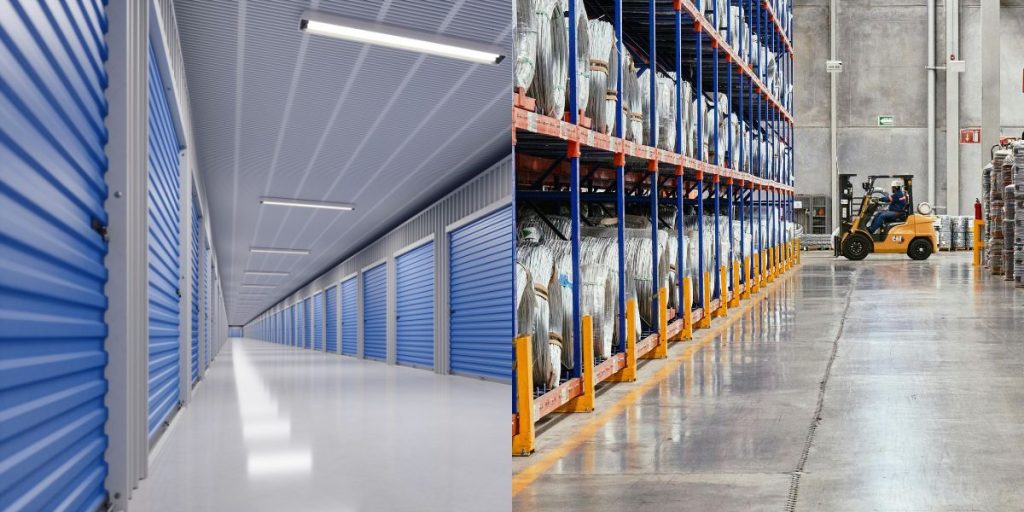
Self storage is suitable for companies that require only storage space and are able to control their inventory. If receiving, storing, and shipping the products require a daily process, then the warehouse becomes more efficient. It all depends on how you utilize the space.
A company keeping exhibition stands between events has different needs from a distributor unloading pallets every morning.
Both might describe their problem as “running out of room.” Right solution would depend upon the type of goods, the nature of work, and the cost involved in managing them.
Before comparing the quotations, know what use you want from the space.
Understand What Each Arrangement Includes
Self storage normally refers to renting an allocated space for one’s possessions or inventory. Your team manages the contents, unless additional services are agreed.
A warehouse lease provides you with premises that will be used for the intended purposes. However, a warehouse lease does not provide personnel for counting, packaging, and delivering your goods.
Managed warehousing is a separate arrangement. The logistics firm store the goods and carries out specific activities as per the service agreement. Such activities may include receiving of goods, selection, packaging, and shipment of goods.
Shared warehousing can also offer business premises within a larger business entity. You do not need to rent the whole facility.
This matters when comparing prices. One quote might cover space alone. Another might include storage and handling services.
Find out what is being rented and who is doing the work.
Self Storage and Warehouse Space Compared
The comparison factors are outlined in the table presented below. Facilities and contractual terms differ, so make your own evaluation using the table.
| Decision point | Self storage | Warehouse space |
| Main purpose | Holding goods, equipment, or reserve stock | Storage, with potential for a wider receiving and dispatch operation |
| Amount of space | A unit selected around your inventory | A leased area, shared allocation, or agreed pallet positions |
| Handling | Often managed by your own team | Managed by your staff or a contracted operator |
| Deliveries | Receiving arrangements need confirmation. | Assess truck access, unloading areas, and receiving capacity |
| Equipment | Confirm permitted shelving and handling methods | Confirm the availability and suitability of racking and handling equipment |
| Staff activity | Working from the unit needs explicit agreement | Planned work must suit the premises and permitted use |
| Growth | Check availability before assuming you can change units | Assess expansion space and the terms for changing capacity |
| Price comparison | Include rent, transport and collection time | Include rent or service fees, setup, staffing, and handling |
None of the two automatically gives you unlimited access or insurance for your goods. The lettered offer must indicate that.
Match the Space to Stock Volume and Movement
The frequency of movement of goods may be as important as their space usage.
One company could have bulky display equipment, which it will retain for several months and then collect for one project. Another company could have fewer cartons but require product retrieval on an ongoing basis.
The first needs enough capacity and suitable loading arrangements. The second needs a location and service that support frequent access.
Write down a normal week:
- How many deliveries arrive?
- Are they loose cartons, pallets, or larger loads?
- How often do goods leave?
- Who loads and unloads them?
- Do individual orders need packing at the site?
Include your busiest expected period as well. A space that works for ordinary trade might become difficult to use during a seasonal campaign.
For example, an events company collecting equipment before booked jobs could consider self storage. A distributor with daily pallet movements should assess facilities designed around that handling requirement.
These are just the initial steps. The actual inventory and access procedures still need to fit.
Check the Loading Route Before Comparing Floor Area
Even if there is enough space in the unit, if you find it difficult to transport goods, then it is not the good option.
Measure your large items and tell the providers how they will arrive. For instance, a van with manageable cartons has different route requirements than a truck with loaded pallets.
When choosing the facility, think about the complete route:
- Vehicle access and stopping space.
- Loading bays or unloading areas.
- Door widths and height restrictions.
- Lifts, ramps, and internal routes.
- Available handling equipment.
For instance, Jafza’s warehouses have features like forklift ramps and truck loading docks. This is what makes handling infrastructure as important as the size of the premises.
These are the features that come with the particular facilities. It would be wrong to assume that all warehouses have the same layout.
This also applies to self storage. Verify the access point before delivering your load.
Compare the Total Cost of Operating From Each Option
A smaller rental amount does not necessarily mean a smaller total cost.
Self storage might be appropriate for a business that collects on an intermittent basis and requires little handling. Frequent trips, paid transport, or repeated loading can change that comparison.
The warehouse leasing agreement can include setting up the facility and organizing personnel or machinery. A managed service might price those tasks separately instead.
Request a breakdown covering:
- Rental or storage charges.
- Minimum terms and notice requirements.
- Moving and setup costs.
- Shelving, racking, or equipment.
- Receiving and dispatch charges.
- Travel and staff time.
- Utility, taxes, and insurance when relevant.
Compare the same stock volume and operating period. One should not compare a limited introductory offer with the total annual cost of an alternative.
Also estimate costs at normal and peak activity levels. A fee based on each move will have a different behavior compared to rent charged at a fixed rate.
Keep the initial deposits and ongoing expenses separate. Initial deposits impact the cash flow at the start, even though they will be reimbursed eventually.
Do not use your own estimates, and do not rely on the fact that one kind of place always cost less.
Check the Conditions Your Products Need
The goods should guide the storage environment.
Clothing, paper documents, electronic equipment, and specialty items do not have the same requirement. Look for guidance from the supplier and product information to identify what is important.
Find out what the facility can control. Air conditioning, humidity control, and refrigeration are three different types of environments.
For those products where there is a defined temperature range, find out how that range is maintained and controlled. The label “Climate-controlled” is not an answer to that.
If any items need approval before storing, tell your provider clearly. Such items include liquids, batteries, or the ones with expiration dates.
Proper protection includes packaging and stacking. Goods need stable support, appropriate stacking, and room for the handling method involved.
Dubai Self Storage Solutions provides stock storage in Dubai. Include details of what the products are and how they should be handled in order for the team to assess their suitability for transport.
Decide Who Will Manage the Goods
More space does not remove the work involved in running a stock operation.
Somebody will still have to accept the deliveries, record the quantity, and note where it has been stored. If you process your customers’ orders from there, then sorting and delivering also should be taken care of.
The warehouse lease leaves all these responsibilities to you unless these services are arranged separately.
A managed provider can perform defined tasks. For instance, DHL’s warehousing services differentiate storage from other functions like order processing, packaging, and dispatching.
If you have an order handling problem, consider operational assistance as well as capacity.
Before accepting any service, ensure that:
- What the provider receives and checks.
- Who maintains inventory records.
- Which handling tasks are included.
- When orders or collection requests must arrive.
- How damaged goods and discrepancies are reported.
An empty warehouse will not resolve your staff shortage problem. Likewise, a managed service will need scope to bridge any gaps between you and the operator.
Choose Capacity Around Realistic Growth
Expanding firms require space, but there must be some justification for the forecast.
Base your forecast on existing inventory, valid purchase orders, and anticipated seasonal demand. Make sure to separate your current needs from your future planning needs.
A short increase before Eid may call for temporary capacity. A new distribution contract with regular deliveries could justify a different operating setup.
Check how changes work under each offer. The self storage business may provide bigger units, but their availability should be checked.
The warehouse business may give you the option to adjust your allocation. A dedicated lease will have its own terms for adding space or leaving.
Some businesses use both options. Regular dispatch stock stays at the main operation, while occasional equipment is held elsewhere.
That arrangement is useful only if the extra journeys and administration remain manageable. Splitting goods across locations creates another task to control.
Confirm the Intended Use Before Signing
Describe what activities will occur at the facility as well as the inventory storage requirements.
Storing Sealed cartons is not the same thing as assembling products, repacking goods, or processing orders on a daily basis.
Make sure you have documented proof that the premises and the agreement allow your planned use. Make sure you have verified any applicable activity authorizations with the appropriate authority.
There are different requirements depending on the location and nature of activity. As an example, Jafza links permissible activities to the business license and environmental, health, and safety approval. This is a specific requirement for a certain location and it’s not applicable to all Dubai facilities.
Your inspection should include the entry protocol, access control and how a issue will be notified.
Insurance issues should be verified for whether the coverage applies to your building, your goods, or both. Establish the cover applicable during transport separately.
These details are part of choosing suitable premises and services. These need to be sorted out prior to the arrival of goods.
Frequently Asked Questions
Is self storage suitable for business stock?
Yes, if the goods are acceptable and the space satisfies their storage and accessibility needs. It works best for small businesses, e-commerce startups, and seasonal operations. Verify the exact product list and frequency of collections by your team.
Is a warehouse always cheaper for larger quantities?
No. Large quantity may affect the cost comparison, But rent is just the one factor. Consider handling, labor, machinery, and transportation. Shared or managed warehousing also has a different cost structure than self-leased premises.
Does renting a warehouse include staff and forklifts?
Not automatically. The premises lease and operating service are two different deals. It is important to verify the availability of the equipment, who can operate and handle the equipment.
Can I pack online orders inside a self storage unit?
Only where the provider permits that activity and the setup is suitable. Explain the proposed work before booking. Do not assume space rental would include space for staff members and packing/courier pick-ups.
What is shared warehousing?
A shared warehouse provides businesses with an allocation within a bigger warehouse facility. Depending on the contract, it may contain storage and handling services. Compare the space allocation, minimum charges and included work.
How do I know when to move beyond self storage?
Review the arrangement when collections become disruptive, handling needs increase or staff need a dedicated operating area. The decision should follow the work required. There is no standard quantity of stock at which businesses should have a warehouse.
Can I use storage alongside an existing warehouse?
Yes, where the additional location suits the goods and collection needs. It can hold occasional equipment or temporary overflow. Consider the additional transportation, record-keeping and staffing costs when determining if the set-up is worthwhile.
Choose Space Around the Way Your Business Works
Start with the goods, delivery pattern and work that needs to happen. Then compare the premises and services capable of supporting them.
Dubai Self Storage Solutions offers business storage in Dubai for inventory, equipment, office furniture and other acceptable business items.
Contact the team for discussion on your inventory, period of storage and other needs.